
High surge loads
- Air conditioners during compressor start
- Induction cooktops with short high-draw bursts
- Microwave usage stacked with other AC loads
These loads test inverter headroom and battery discharge rate more than total daily capacity.
Battle Born lithium battery configurations are commonly used in these environments because modular 12V storage can be scaled for travel, marine, and mobile off-grid use. PyMox helps model these systems before wiring changes or battery-bank expansion.
The goal is practical planning: ensure daily loads are covered, charging windows are realistic, and inverter behavior matches how the system is actually used in the field.
PyMox is independent and not affiliated with Battle Born Batteries. Brand names are referenced only for identification.
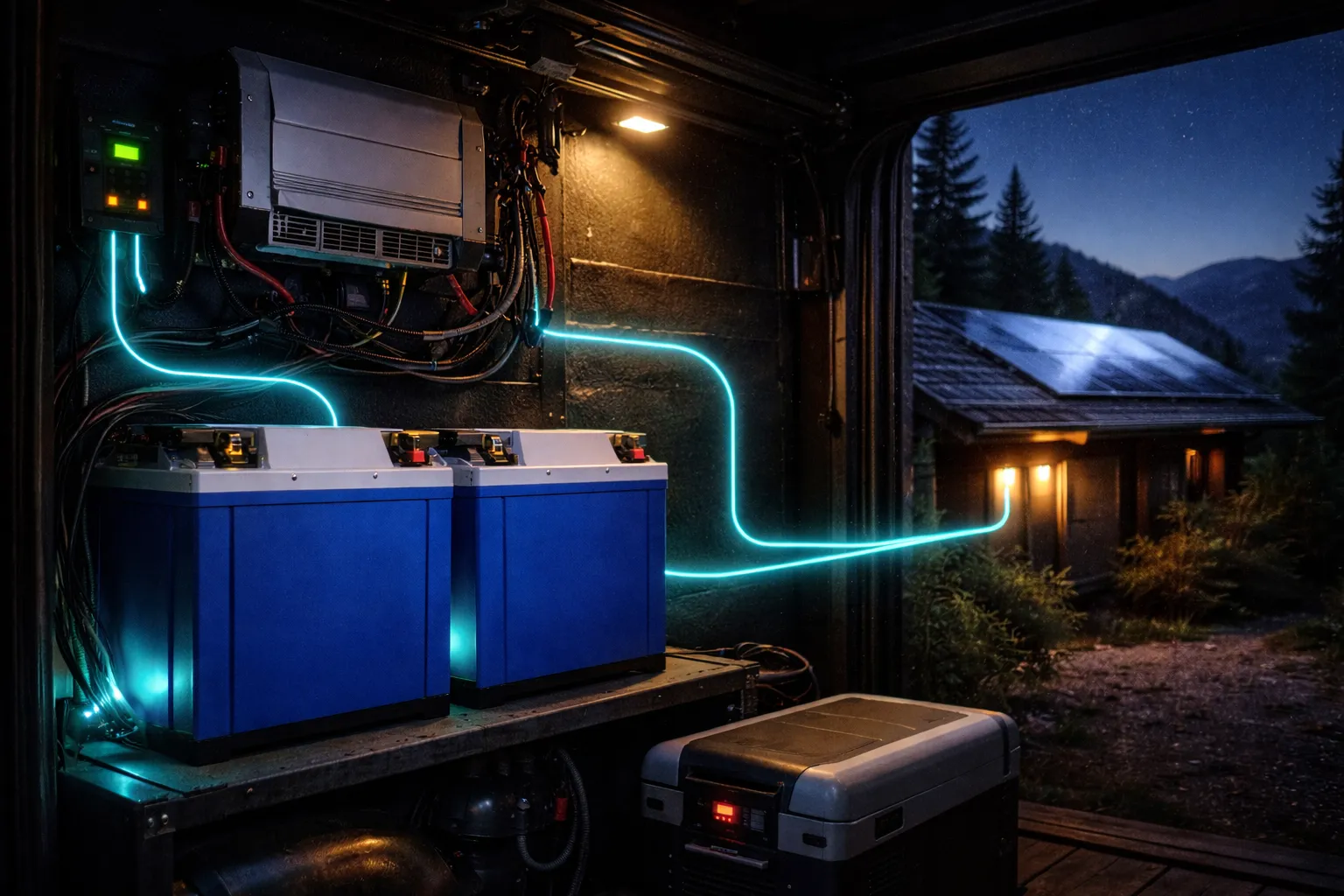
Most Battle Born RV setup designs begin with a 12V core architecture, then scale in parallel to increase amp-hour capacity. Some mobile systems move to series or 24V arrangements when inverter efficiency and cable-current constraints justify the change.
For field builds, battery placement is constrained by compartment size, cable run length, thermal exposure, and weight distribution. These constraints usually matter as much as nominal capacity.
Common references in planning conversations include Battle Born 100Ah LiFePO4 modules, Battle Born heated lithium batteries for cold-weather operation, and Battle Born GC2-style batteries. In PyMox, these are treated as architecture inputs rather than device-specific integrations.
These loads test inverter headroom and battery discharge rate more than total daily capacity.
These determine baseline battery drain and strongly affect overnight autonomy.
In constrained mobile systems, charging strategy often matters as much as bank size.
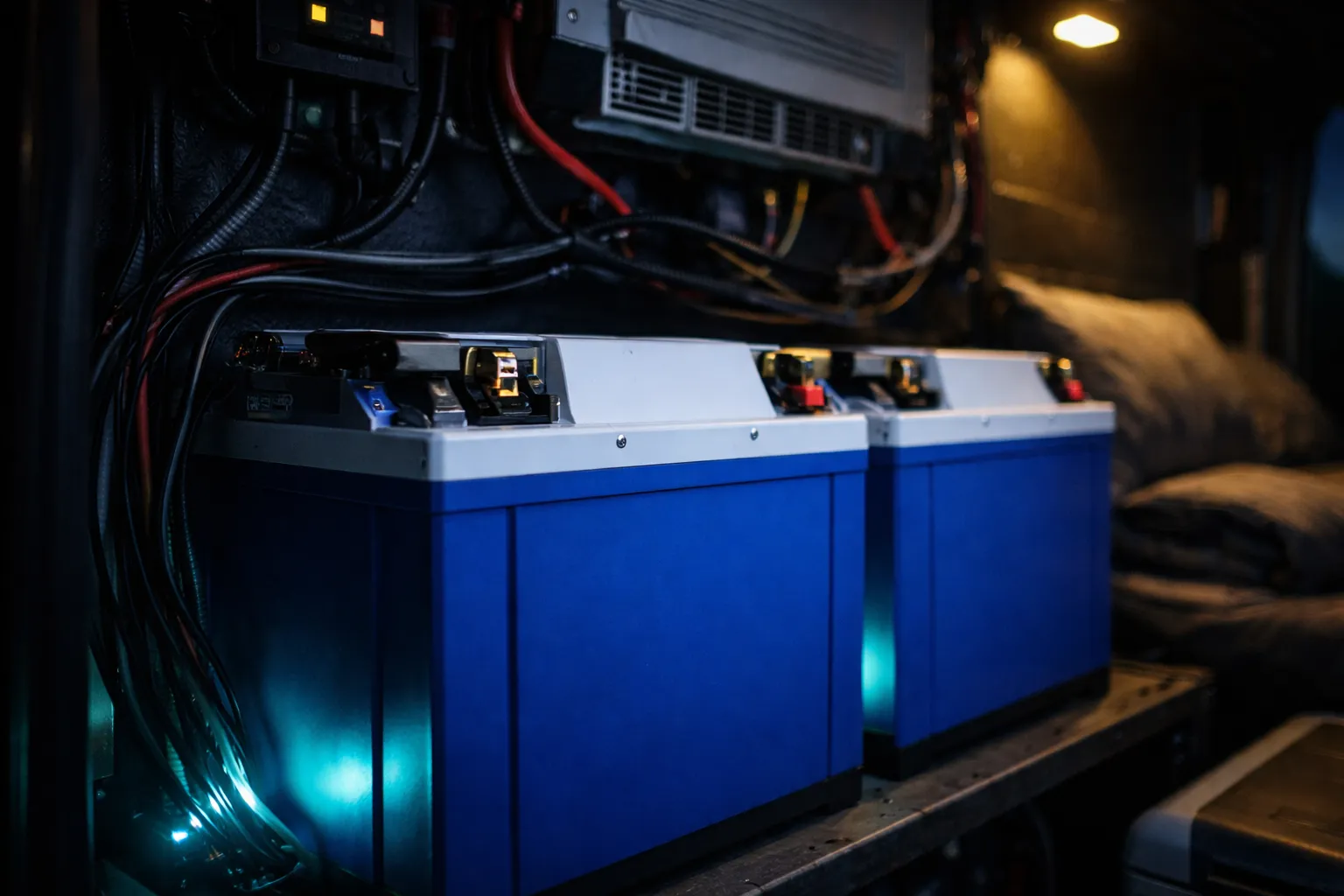
PyMox models mobile electrical behavior from system-level inputs. It does not depend on Battle Born BMS communication and does not require direct hardware integration.
A light-use Battle Born camper battery setup often starts around 200Ah lithium, combining roof solar with shore charging and modest inverter demand. The key question is whether overnight reserve remains sufficient after evening appliance use.
A 400 to 600Ah lithium configuration with alternator plus solar charging is common where cooking, work equipment, and climate loads run daily. Planning centers on recharge recovery time and sustained inverter support.
A parallel Battle Born marine battery bank with generator support can prioritize navigation, refrigeration, and communication loads. The design challenge is balancing critical-load continuity against cycle depth and available charging windows.
Mobile systems evolve. Additional batteries are often added after real usage reveals shortfalls. Expansion is straightforward only when cable sizing, busbar layout, and charging capacity were planned for growth from the start.
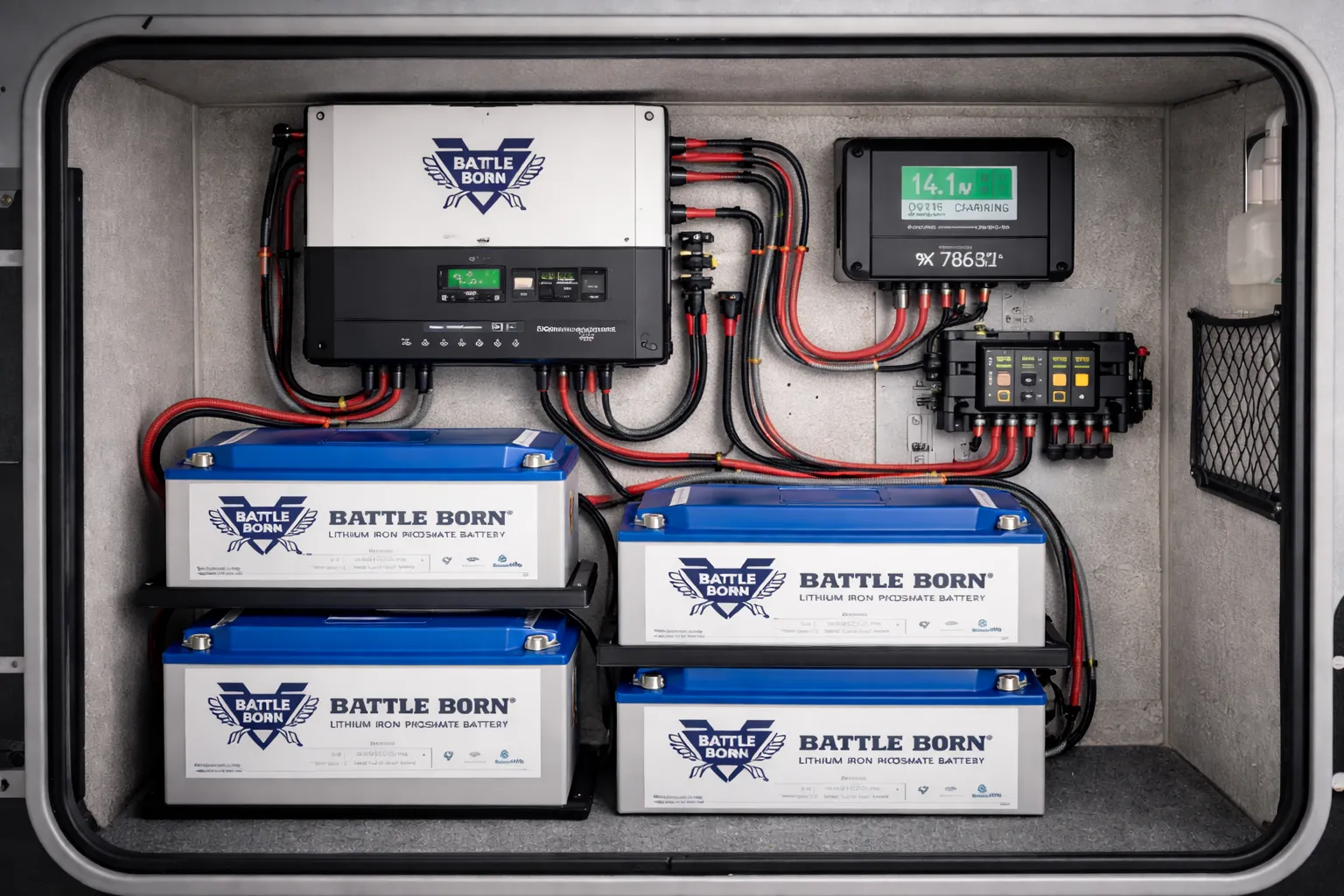
It depends on daily demand, inverter loads, and charging opportunities. PyMox helps size capacity around actual usage rather than nominal assumptions.
Yes. PyMox can model Battle Born 100Ah based architectures as vendor-neutral 12V or 24V systems.
Start with real load profiles, then test autonomy and recharge timing from solar, alternator, and shore power in the model.
Yes. Alternator charging windows can be modeled to assess how drive-time contributes to battery recovery.
Yes. PyMox supports planning for Battle Born off grid system behavior across multi-day usage, charging limitations, and reserve policy choices.
No. PyMox does not integrate directly and instead models electrical system behavior generically.
Use PyMox to validate Battle Born RV setup assumptions, marine load strategy, and recharge behavior with fewer surprises in the field.