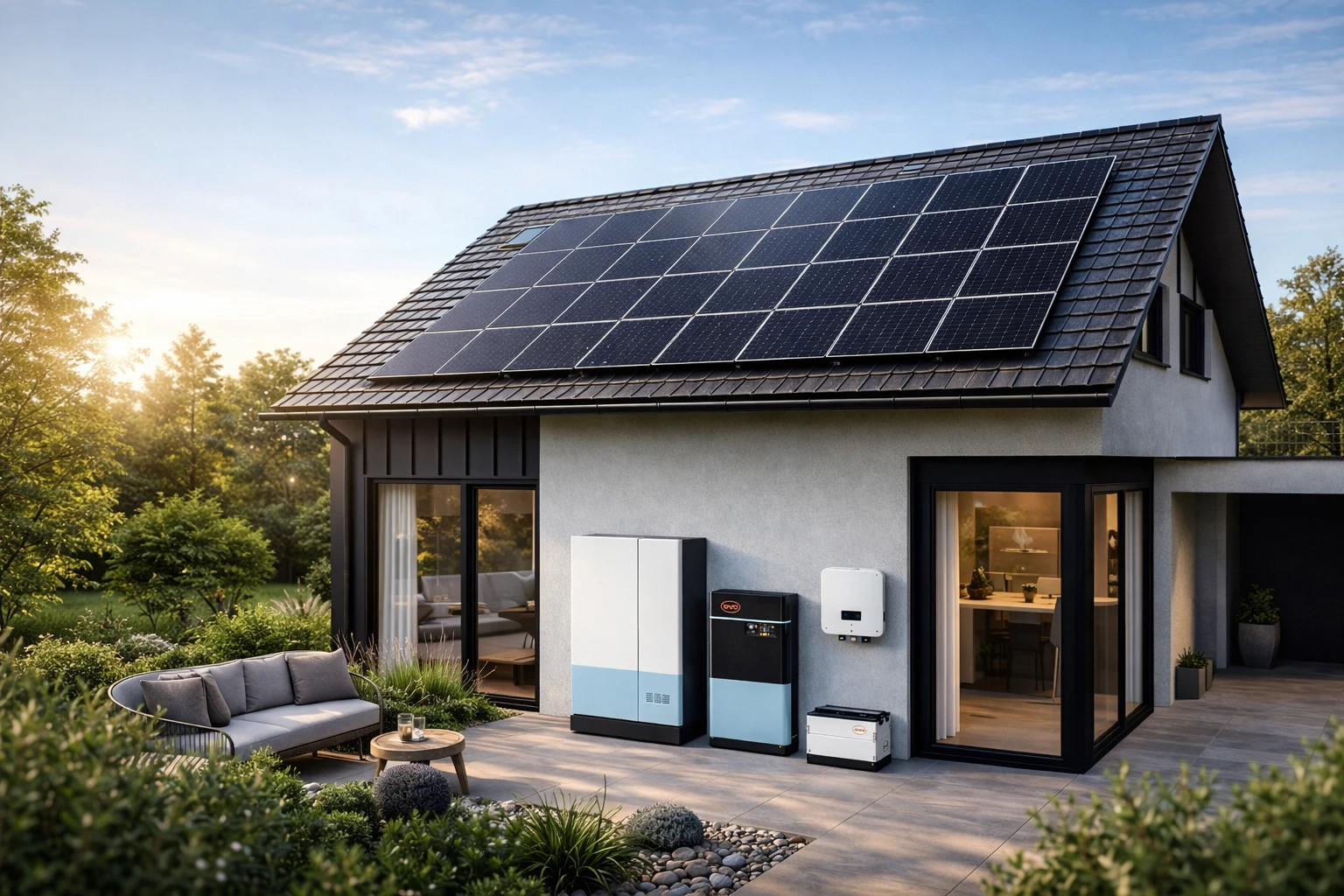
Designing a BYD Battery-Box system requires accurate sizing of storage capacity, inverter limits, and seasonal production.

Over-sizing and under-sizing both create cost and performance penalties. PyMox helps model systems commonly built with BYD energy storage so architecture decisions can be evaluated before deployment.

PyMox is independent and not affiliated with BYD. Brand names are referenced only for identification.

Where BYD systems are typically used

Residential solar and storage

  • Self-consumption optimization under variable solar conditions
  • Backup support for critical home loads
  • BYD peak shaving battery behavior against time-of-use pricing

This is where BYD home battery projects often need clarity around daily cycling and reserve policy.

Commercial storage

  • Load shifting from peak windows into lower-cost periods
  • Demand charge reduction analysis
  • Energy cost optimization with storage dispatch scenarios

In these projects, modeling must balance battery cycling intensity with expected operational savings.

Off-grid and hybrid installations

  • 48V battery-bank planning for remote or semi-remote sites
  • Generator-backed operating scenarios
  • Hybrid grid and storage fallback behavior

These setups require clear understanding of autonomy limits and recovery timing.

BYD Battery-Box system architecture overview

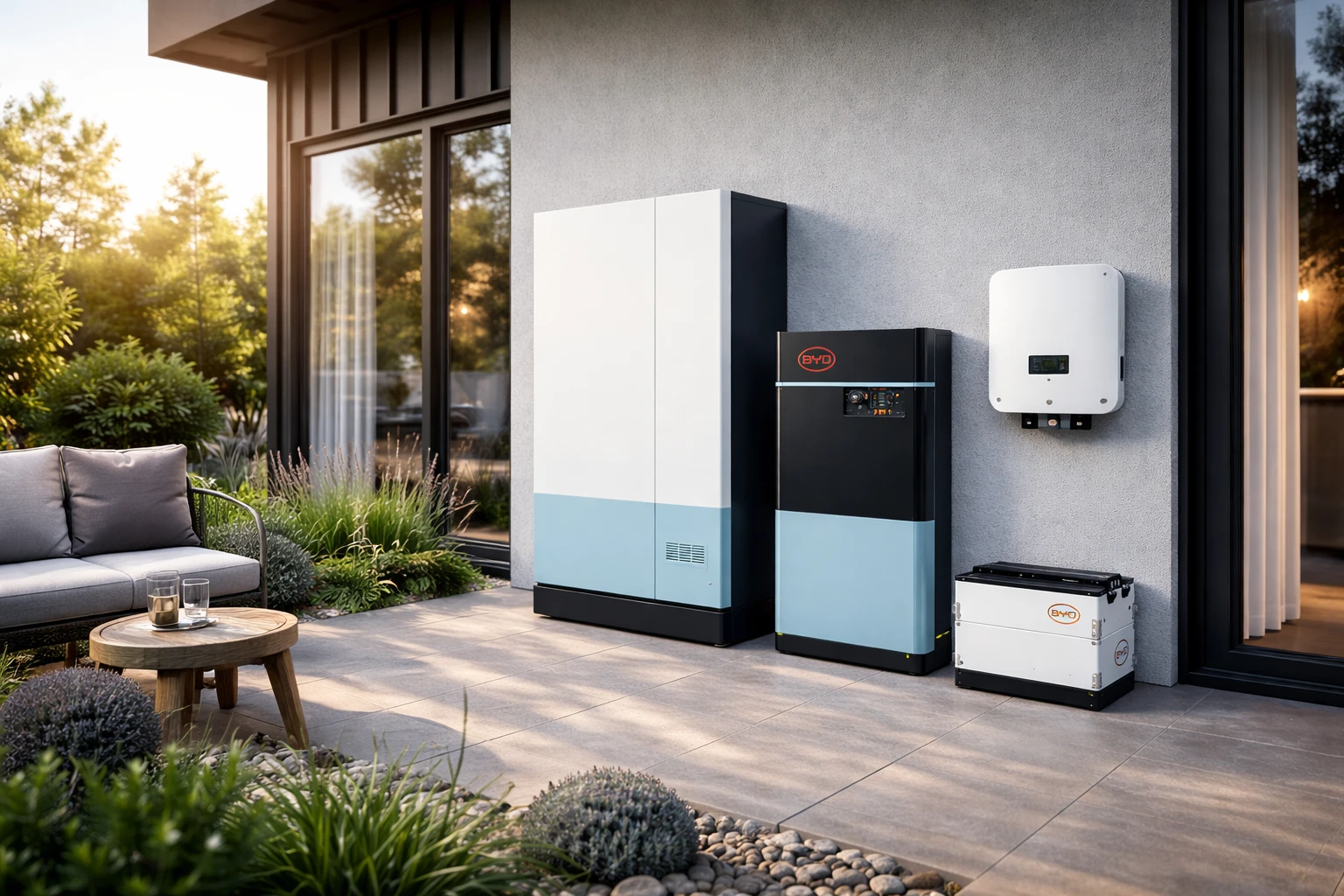
A typical BYD energy storage system is built around modular battery stacks, inverter pairing strategy, and grid interaction requirements. In planning terms, the key variable is often not a single device, but how expansion stages affect charge and discharge behavior.

BYD Battery-Box Premium HVM and BYD Battery-Box Premium HVS architectures are frequently evaluated in projects where modular scaling matters. Designers often need to compare stack growth paths against inverter limits, expected throughput, and reserve requirements.

This is especially relevant when deciding between AC-coupled and DC-coupled layouts. The practical objective is to understand efficiency tradeoffs, control strategy effects, and how grid-connected behavior changes as storage capacity increases.

How PyMox models BYD based storage systems

PyMox models BYD-oriented system planning through electrical characteristics rather than firmware behavior. The simulation layer evaluates system-wide relationships: usable storage, load timing, generation windows, and grid interaction patterns.

PyMox can simulate:

  • Total usable storage capacity in kWh
  • Charge and discharge power limits
  • Peak shaving behavior under tariff windows
  • Self-consumption rates across daily patterns
  • ROI trend analysis under multiple strategy assumptions
  • Battery cycling estimates across seasonal usage
  • Seasonal solar variability impact
  • Generator runtime in hybrid backup scenarios

No BYD firmware communication is required. PyMox does not connect to BYD BMS interfaces and does not perform direct control actions.

Capacity planning and ROI simulation

BYD projects are often financially sensitive because storage sizing directly affects payback behavior. Planning requires both technical and economic modeling, especially where tariff structure and load shape are variable.

5kW home systems

Model baseline storage targets, critical-load duration, and tariff-sensitive discharge windows.

10 to 20kWh residential systems

Evaluate expansion paths, self-consumption gains, and export versus retention decisions.

Small commercial storage

Model load shifting windows, demand charge pressure, and expected cycling intensity.

PyMox helps estimate grid independence percentage, compare export-versus-storage strategies, and analyze ROI direction based on modeled behavior. It is a planning and decision-support platform, not a guaranteed financial outcome engine.

Example storage scenarios

Scenario 1: Residential peak shaving

  • Solar array + BYD battery stack + hybrid inverter
  • Time-of-use tariff modeling for discharge timing
  • Comparison of cost reduction versus reserve retention

Scenario 2: Backup-oriented home

  • Critical-load panel design with 48V storage baseline
  • Grid plus generator fallback path
  • Runtime expectations during extended low-generation periods

Scenario 3: Small commercial storage

  • Load shifting schedule for high-demand windows
  • Demand charge reduction behavior
  • Battery cycling optimization under weekday variability

FAQ

How large should a BYD Battery-Box system be for a home?

It depends on demand profile, tariff structure, and backup goals. PyMox helps model sizing tradeoffs before equipment decisions are finalized.

How many kWh do I need for peak shaving?

The required storage depends on your peak window duration and load intensity. PyMox helps test those assumptions against expected cycle behavior.

Can I simulate a BYD HVM setup?

Yes. BYD HVM architecture behavior can be modeled as part of a vendor-neutral storage system simulation.

Can I simulate a BYD HVS setup?

Yes. BYD HVS-based expansion and usage patterns can be evaluated through the same electrical modeling framework.

What is the ROI of adding battery storage?

PyMox supports ROI-oriented scenario analysis by modeling load shifting, import reduction, and strategy behavior over time. It does not guarantee financial outcomes.

Does PyMox connect directly to BYD batteries?

No. PyMox does not directly integrate with BYD hardware and does not provide device-level control.

Evaluate storage architecture before committing budget

Use PyMox to compare BYD home battery and commercial storage scenarios with clearer technical and economic visibility.