
Step 1
Determine load profile
- Map daily kWh usage across weekdays and weekends
- Capture peak demand intervals and surge-sensitive loads
In practical system design, Pylontech energy storage is often selected for modular lithium capacity, clean rack-mount expansion, and broad pairing options with hybrid inverters. This architecture is common in European residential backup projects and off-grid deployments where staged growth is expected.
PyMox supports planning for these systems through vendor-neutral modeling. It evaluates electrical behavior across storage, generation, and load rather than using brand firmware interfaces.
PyMox is independent and not affiliated with Pylontech. Brand names are referenced only for identification.
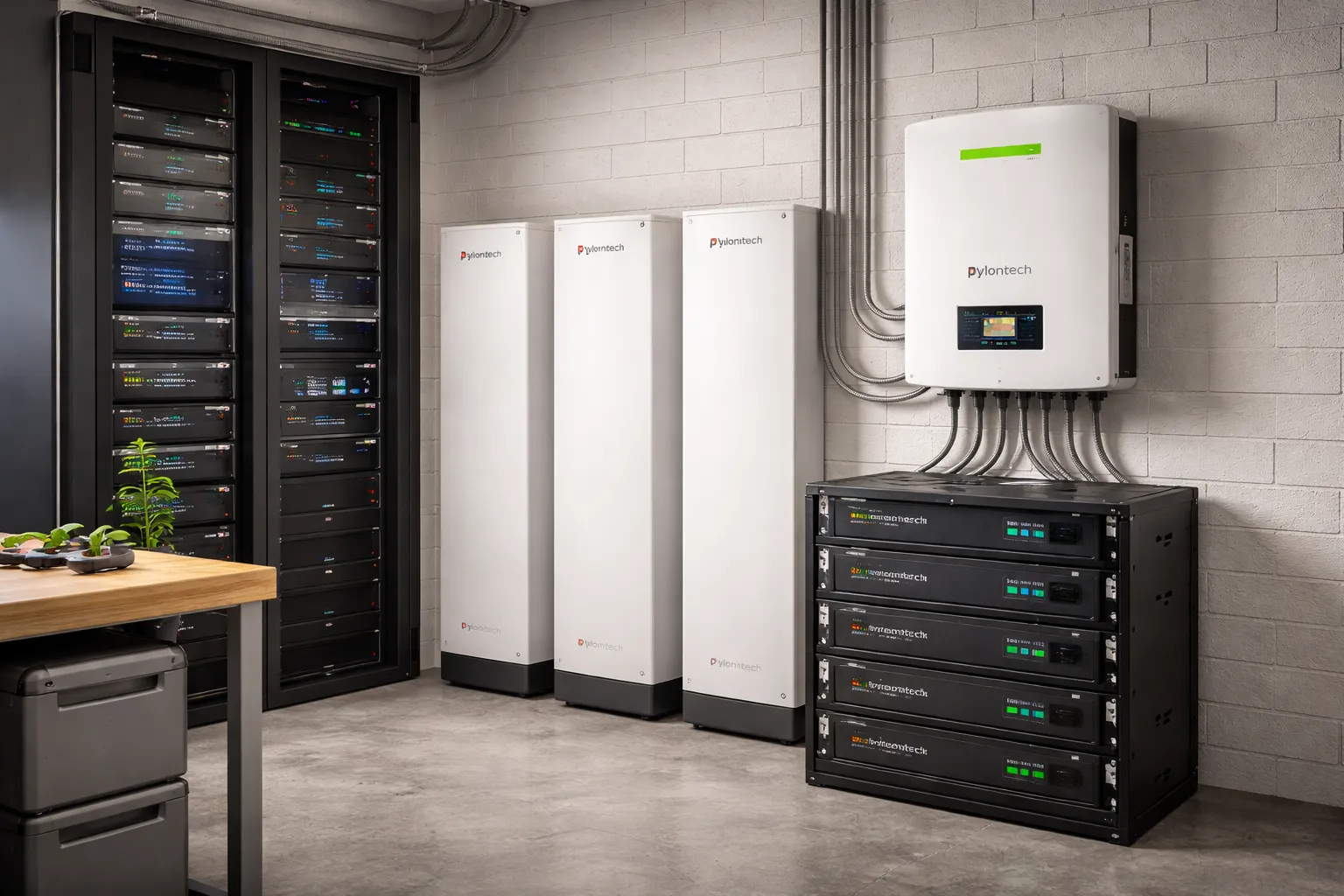
A typical Pylontech 48V system is built around parallel battery modules in a rack or cabinet, connected to an inverter stage and solar charging path. The architecture is intentionally expandable, moving from compact entry systems to larger battery banks without redesigning the full platform.
For planning purposes, common reference families include Pylontech US2000, Pylontech US3000C, and Pylontech Force series deployments. The exact commercial model is less important than the system-level behavior: usable capacity growth, inverter limits, charging windows, and reserve policy.
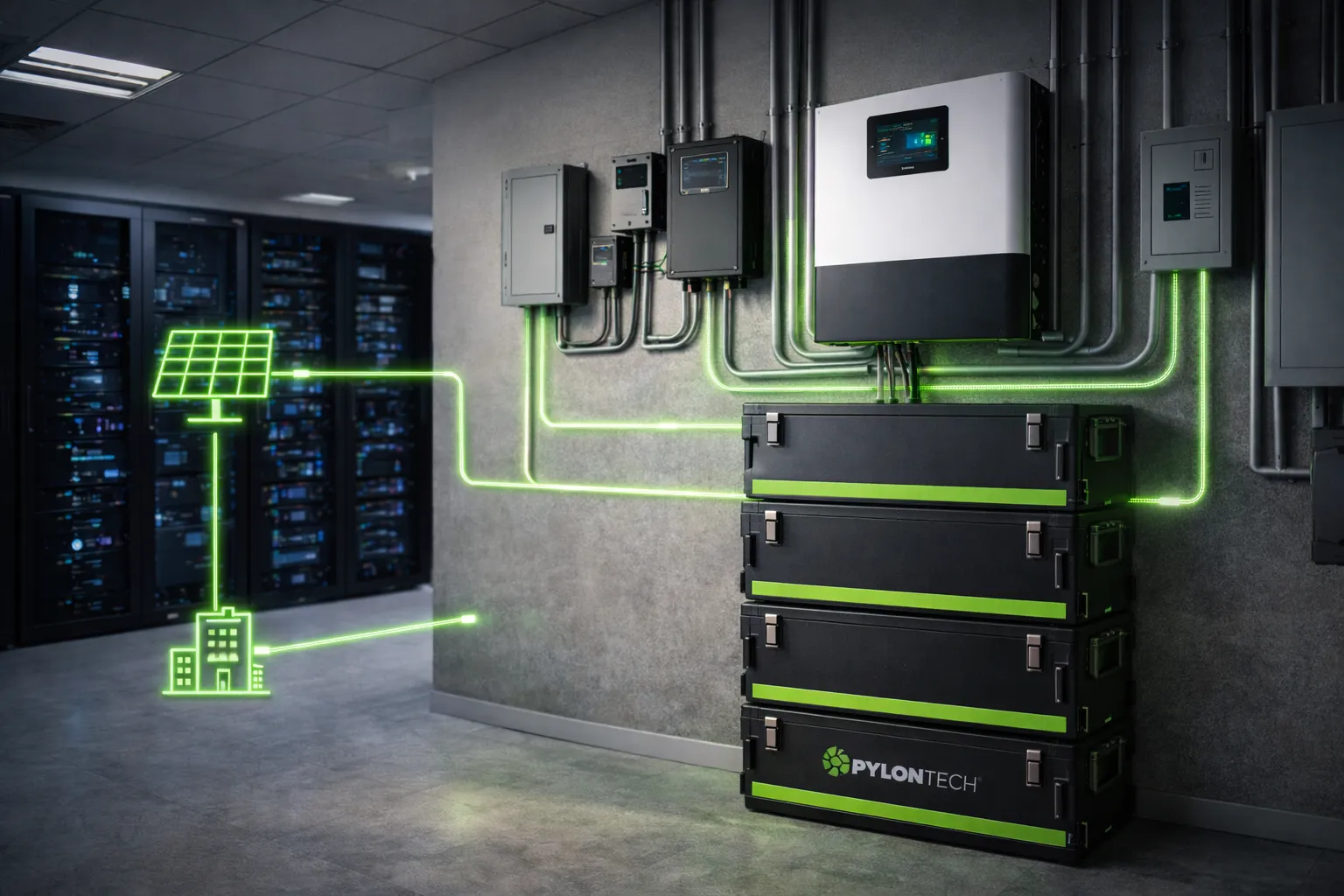
Most installations follow a clear structure: rack cabinet, inverter pairing, solar input, optional generator, and optional grid tie. Modeling this complete chain is essential before hardware is commissioned.
The workflow below is intended for installers and advanced DIY users who need repeatable design decisions instead of trial-and-error changes.
Step 1
Step 2
Step 3
Step 4
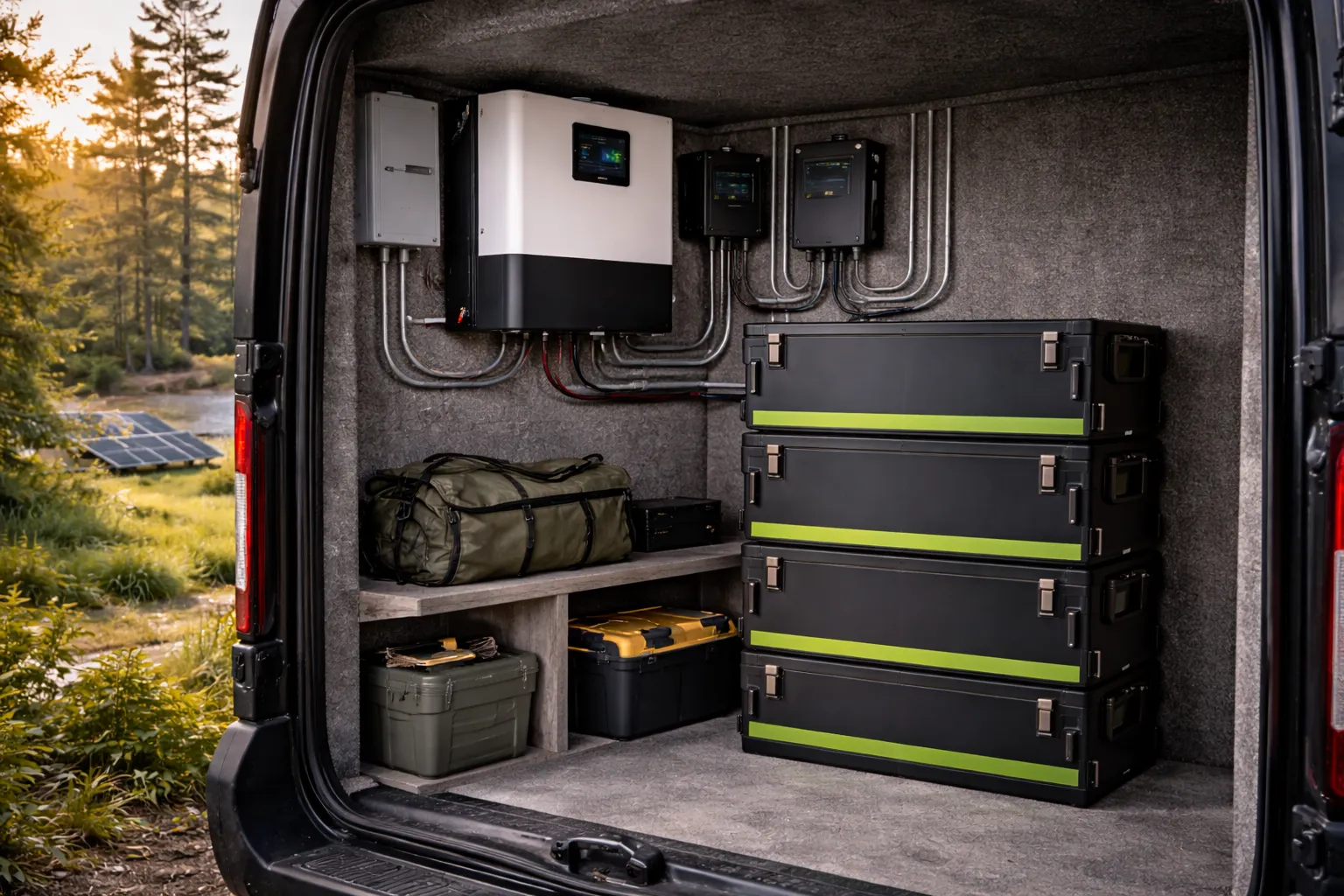
PyMox models the electrical layer required for rack-based storage planning. It does not rely on proprietary Pylontech BMS communication and does not provide hardware-level control.
A practical layout combines solar array input, rack battery storage, hybrid inverter output, and generator fallback. The main modeling target is runtime reliability during low-production periods.
Grid-tied operation with storage optimization and backup continuity. This category focuses on reserve policy, import reduction, and discharge timing.
Storage is deployed for operational cost control, with battery cycling strategy tuned to daily load variation and tariff structure.
Pylontech battery bank planning is usually iterative. Many projects start around 5kWh and expand toward 30kWh or more as consumption profiles change. Early-stage modeling should include physical rack limits, parallel bank strategy, inverter headroom, and future cable routing impact.
PyMox supports phased-installation analysis by testing how each capacity addition changes reserve behavior, charging time, and grid reliance. This is useful for designing systems that are financially staged but technically coherent from day one.
The answer depends on usable-capacity assumptions, reserve target, and inverter limits. PyMox helps model this before selecting final module count.
Yes. Pylontech 48V system behavior can be modeled through vendor-neutral electrical parameters.
Start from daily demand, autonomy target, seasonal solar assumptions, and generator policy. PyMox helps validate tradeoffs before deployment.
Yes. Generator runtime and recharge scenarios can be included in the system simulation.
Yes. PyMox can represent architectures commonly built around Pylontech US2000 and Pylontech US3000C as system-level models.
No. PyMox is a modeling platform and does not directly integrate with Pylontech hardware.
Use PyMox to plan Pylontech energy storage growth, test hybrid strategy assumptions, and reduce design uncertainty.