
Solar panels
- Renogy 100W and 200W panel configurations
- Renogy solar kit layouts
Often used in early-stage roof arrays and expandable field setups where production assumptions matter.
PyMox helps simulate camper, vanlife, off-grid cabin, and small residential architectures commonly built with Renogy components, so planning decisions can be validated before real installation changes.
PyMox is independent and not affiliated with Renogy. Brand names are referenced only for identification.
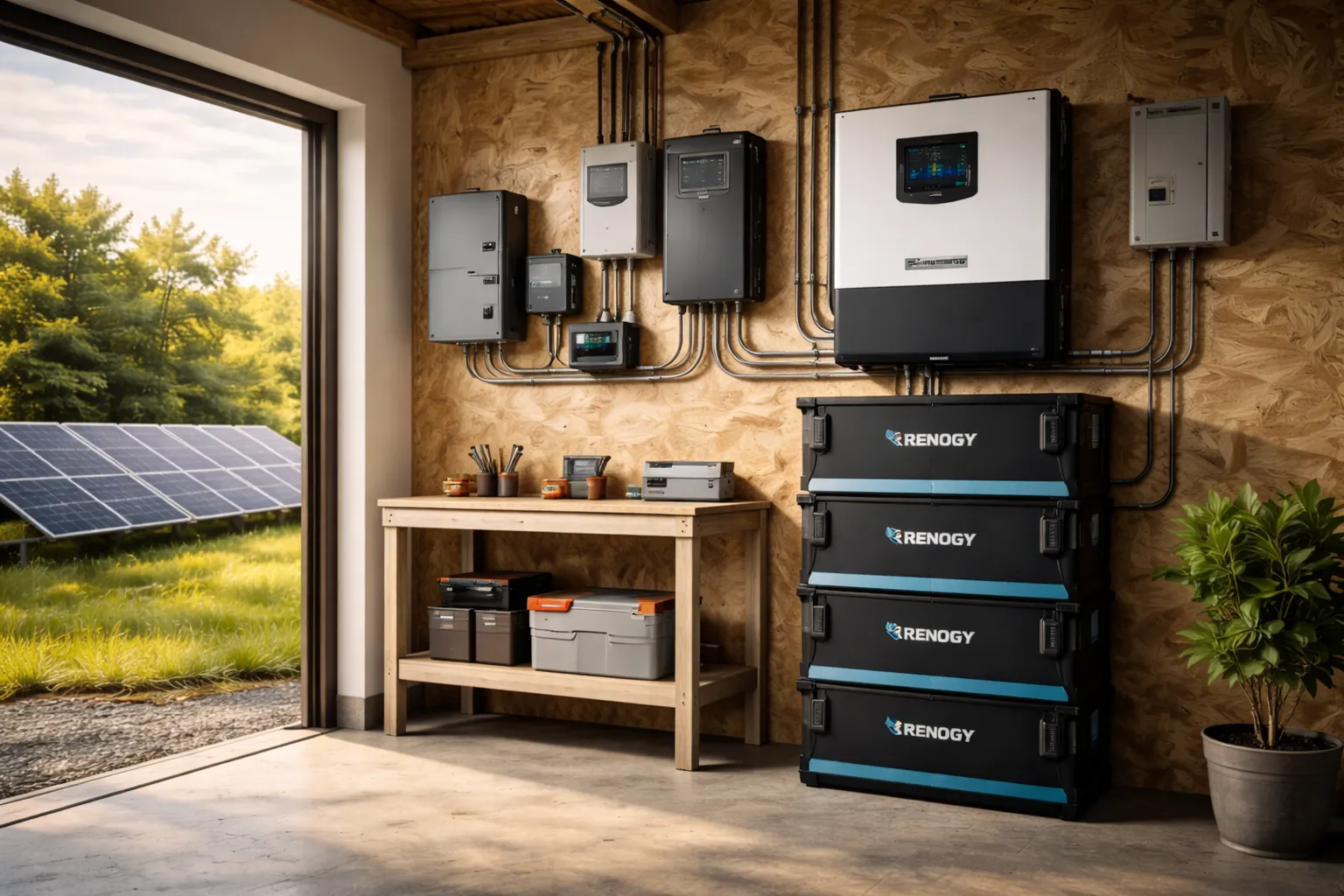
Renogy is a U.S.-founded brand widely known for DIY-oriented solar and off-grid kits. It has a strong footprint in vanlife builds, mobile energy projects, and small cabin systems where compact all-in-one choices are often preferred.
Many users start with a Renogy solar kit or a Renogy 12V system and expand over time into larger storage and inverter architectures. That path is practical, but it can introduce planning questions about charging balance, battery reserve, and long-term upgrade potential.
PyMox addresses those questions through vendor-neutral system modeling. It focuses on electrical behavior and planning clarity rather than device-specific communication layers.
These references are common in project planning discussions for Renogy camper system and Renogy off grid setup workflows. PyMox uses them as identification points, not as integrated device profiles.
Often used in early-stage roof arrays and expandable field setups where production assumptions matter.
Commonly referenced when comparing charging efficiency and behavior under variable irradiance.
Typically evaluated for usable storage, reserve policy, and expansion planning.
Often central in sizing discussions for surge behavior, AC continuity, and headroom planning.
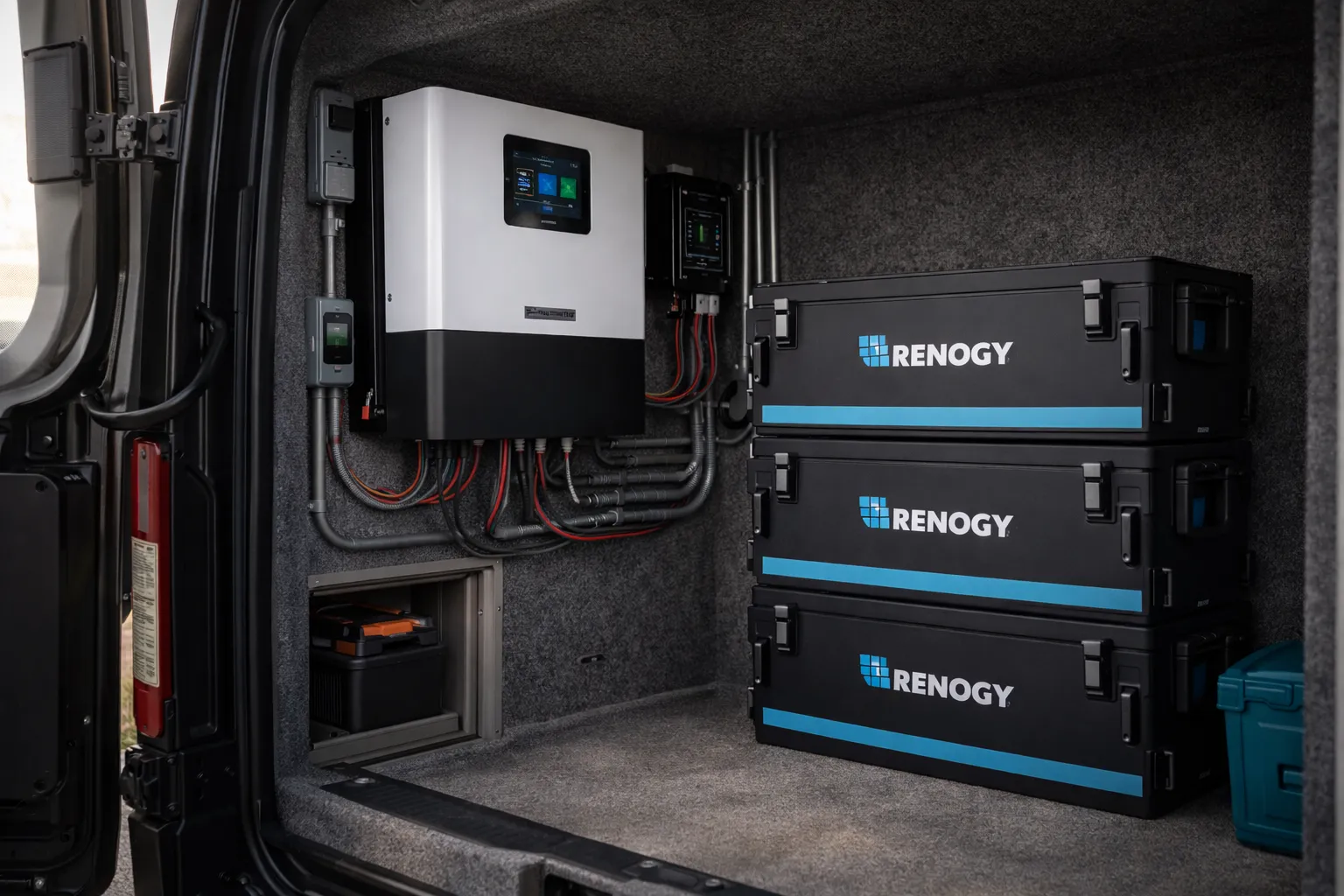
PyMox models system behavior using electrical relationships: voltage domains, current flow, battery storage behavior, solar generation, and demand profiles. It does not depend on Renogy firmware logic or proprietary communication.
PyMox simulation can cover:
This keeps planning vendor-neutral and makes it easier to compare architecture decisions for Renogy inverter charger setup options without implying direct hardware compatibility.
A common Renogy camper system combines roof solar input, DC-DC alternator charging, lithium storage, a 120V inverter path, and shore power charging when parked.
A Renogy off grid setup can include ground-mounted solar, MPPT charging, a 24V battery bank, inverter output, and generator backup for low-production windows.
A compact residential backup architecture can combine solar panels, battery storage, and a critical-loads subpanel where peak shaving is modeled rather than assumed.
Modeling before final procurement helps avoid costly rework and reduces uncertainty during commissioning. For most systems, planning errors are caused by assumptions, not by individual device failure.
PyMox is a decision-support tool for architecture planning and validation.
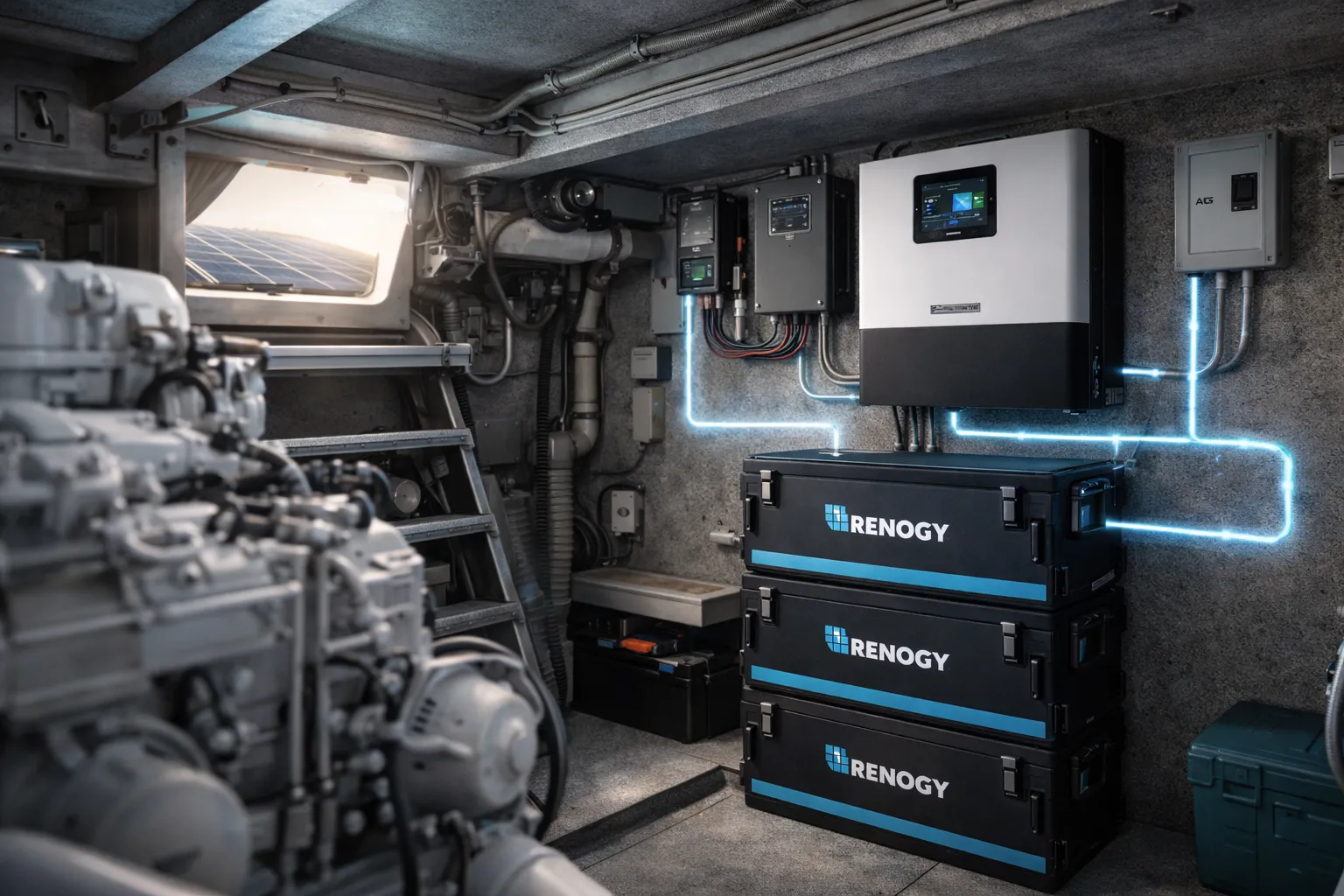
It depends on daily use, overnight loads, reserve target, and charging windows. PyMox helps model those assumptions before you commit battery count and size.
Yes. You can model architecture patterns commonly built from a Renogy solar kit using vendor-neutral electrical behavior.
Start from peak concurrent loads, surge behavior, and reserve policy. PyMox helps evaluate inverter headroom against realistic usage profiles.
It depends on cable lengths, load levels, expansion goals, and efficiency targets. PyMox helps compare both architectures under the same demand assumptions.
No. PyMox does not integrate directly with Renogy products and does not control hardware.
No. PyMox complements brand dashboards by providing architecture-level planning and simulation clarity.
Use PyMox to validate system behavior before changing wiring, battery sizing, or charging strategy.