Inverter and charger layer
- Victron MultiPlus-II
- Victron Quattro
These are commonly considered in system planning where AC load support, transfer behavior, and charging strategy must be validated together.
PyMox helps you simulate camper, marine, off-grid, and residential architectures commonly built with Victron Energy components, so you can validate system behavior before making field changes.
PyMox is independent and not affiliated with Victron Energy. Brand names are referenced only for identification.
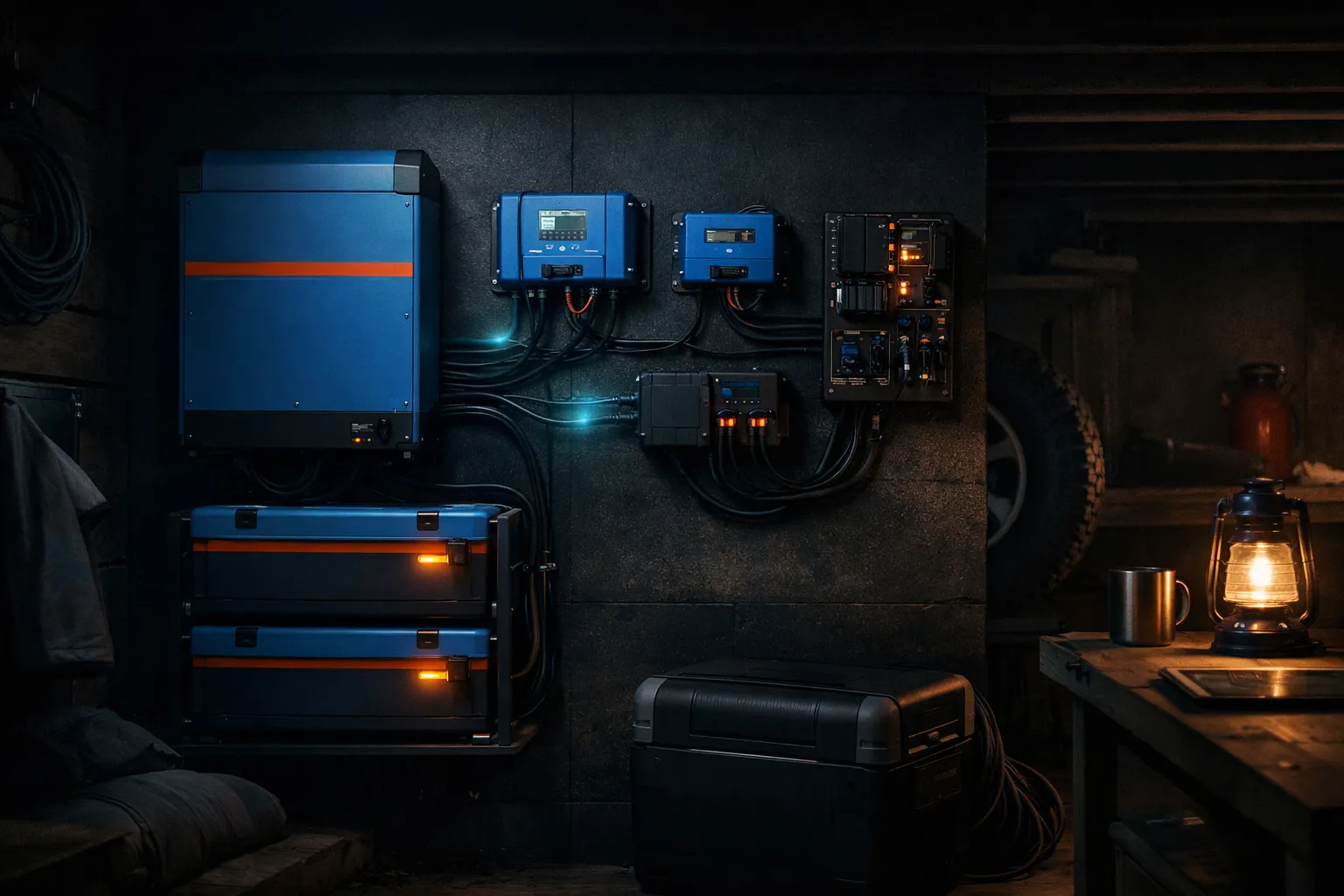
Victron Energy is a Dutch manufacturer with strong adoption in mobile and independent energy systems. Its products are frequently used in marine installations, RV platforms, and off-grid cabins where modular architecture matters.
In practical system design work, Victron components are often selected because they can be arranged across 12V, 24V, and 48V layouts while supporting staged expansion over time. That flexibility is useful, but it also increases design complexity, especially when battery reserve policy, inverter loading, and seasonal generation all interact.
PyMox addresses that complexity from a vendor-neutral perspective. Instead of treating each device as an isolated dashboard, it models how the total electrical architecture behaves under realistic demand and generation conditions.
The components below are common reference points when planning a Victron camper setup, Victron off-grid system, or Victron 48V system design. PyMox does not act as a product catalog and does not depend on direct device integration.
These are commonly considered in system planning where AC load support, transfer behavior, and charging strategy must be validated together.
These are often part of solar input planning where production variation and charging windows need to be tested against daily consumption.
These references are common in storage sizing discussions, especially when balancing reserve thresholds, depth-of-use, and load diversity.
These tools are often used for operational visibility in deployed systems. PyMox serves a different role: planning and simulation clarity before and between configuration changes.

PyMox models electrical behavior using voltage, current, storage, generation, and load relationships. It does not replicate brand firmware logic and does not require direct hardware communication.
Within this framework, PyMox can simulate:
This makes PyMox useful for planning a Victron off-grid system, evaluating Victron MultiPlus sizing assumptions, and comparing strategy outcomes in Victron 48V system designs without implying direct integration.
A common Victron camper setup combines rooftop solar, alternator charging while driving, shore power when connected, lithium battery storage, and inverter-charger support for AC loads. The modeling challenge is balancing charge priority and reserve retention while avoiding campsite overload.
A Victron off-grid system at 48V often includes a solar array, a larger battery bank, inverter output for household circuits, and backup generator support. The main planning question is resilience through low-solar periods.
Hybrid home architecture combines grid connection, solar input, battery storage, and demand peaks that shift through the week. Modeling helps validate when battery discharge should reduce grid import versus preserve reserve.
Modeling before procurement or installation reduces redesign risk and gives clearer expectations for real operation. In practical terms, the biggest failures are often not component failures, but planning assumptions that were never validated as a full system.
PyMox should be treated as a decision-support tool for architecture, simulation, and planning clarity.
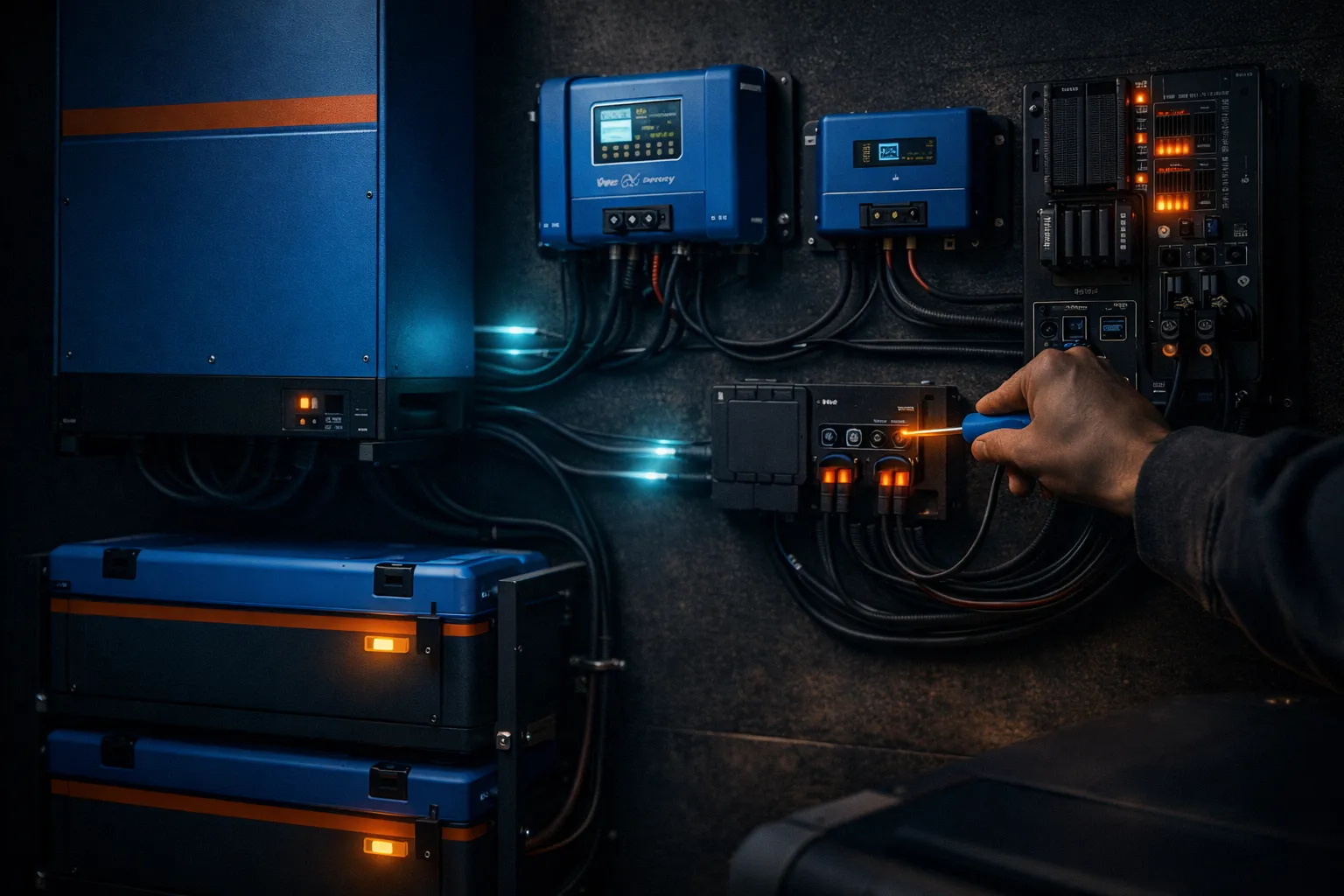
Battery count depends on total demand, autonomy target, and reserve policy. PyMox helps model those assumptions before purchase decisions are made.
Yes, you can model architectures commonly built around Victron MultiPlus designs. The simulation remains vendor-neutral and behavior-based.
Start with daily and overnight load demand, then compare expected solar contribution by season and location assumptions in the model.
Yes. PyMox supports backup runtime and reserve recovery modeling under low-generation conditions.
No. PyMox does not integrate directly with Victron hardware and does not control field devices.
No. PyMox complements operational dashboards with architecture-level modeling and simulation clarity.
Use PyMox to model system behavior clearly before committing to architecture, sizing, or strategy decisions.